A good playtest starts with a small question. These are the worlds we use to ask ours.
Two ideas, room to play.
Prototype studies from the studio. The images are concept illustrations; these pages are a look at the design, rather than a release announcement.
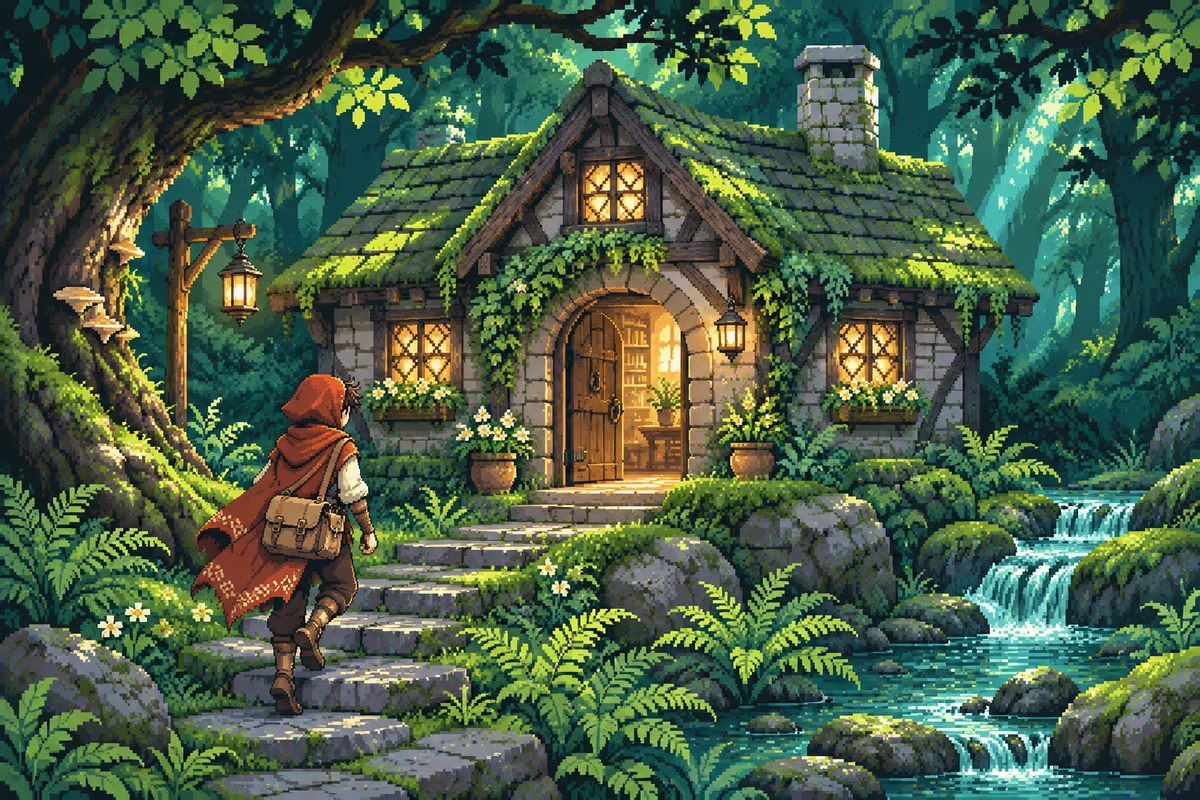
Mosslight Post
A delivery walk through a woodland settlement. The route should be readable through its landmarks: a bend in the path, a lit window, the silhouette of a post box.
The playtest questionCan the next destination feel clear before we add a waypoint arrow?
Pocket Orbit
A compact navigation idea built around light and motion. A changing orbit becomes a hint about where to move, leaving space for the player to discover the rhythm.
The playtest questionCan one consistent visual cue teach a movement rule without a paragraph of instructions?
From the sketchbook.
Three things we return to when a prototype feels harder to read than it should.
Make the landmark earn its place
In Mosslight Post, a landmark should help the player decide something. If every corner has the same bright accent, the route loses its hierarchy.
Let a cue keep its meaning
For Pocket Orbit, light is a navigation language. Reusing the same cue for decoration would make that language less reliable.
Leave a useful question for the next build
A short prototype does not need to settle every design choice. It needs to make the next decision easier to see.
Made with curiosity.
Kestrel Bits is a small independent game workshop. The Playroom collects ideas in progress: a place for prototype concepts, design questions and the small decisions that make a world feel inviting.